From Alinsky to the Administrative State
Saul Alinsky was an activist, author and political theorist. In these roles he mentored or inspired many on the political left, notably Hillary Clinton who wrote her senior thesis at Wellesley on his views.
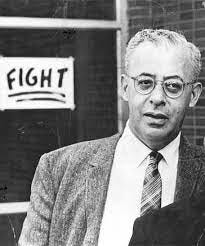
Alinsky’s insight was tactical; its afterlife became structural. In Rules for Radicals, he wrote for street-level organizers, not civil servants. His “crisis as opportunity” method was designed to break complacency — to use moral outrage as fuel for political mobilization. But over the next half-century, his strategy of disruption would be absorbed by the very institutions it once sought to challenge.
By the 1970s, the activist’s toolkit had migrated from the picket line to the policy office. Crises — whether economic, environmental, or public health — became not interruptions of normal governance, but the justification for its expansion. Each emergency validated new regulatory powers, new spending, and new bureaucracies, all framed as temporary yet almost never repealed.
The Alinsky principle was reborn in managerial form:
The energy crisis produced the Department of Energy (1977).
The savings-and-loan crisis birthed whole categories of financial oversight.
The terror crisis after 9/11 gave us the Department of Homeland Security and the Patriot Act.
The health crisis of COVID-19 extended emergency declarations into multi-year rulemaking by agencies never designed to legislate.
Each generation inherits the precedent that crisis equals competence — that to govern means to manage emergencies indefinitely. In the process, the republic has internalized what Alinsky once prescribed for radicals: continuous mobilization, perpetual justification, and the blurring of line between temporary power and permanent control.
The activist state, born in protest, matured into procedure. And like all bureaucratic revolutions, it succeeded precisely because it forgot its origins.
Citations & Notes
Saul D. Alinsky, Rules for Radicals: A Pragmatic Primer for Realistic Radicals (New York: Vintage Books, 1971), pp. 88–90.
– Alinsky’s line “The organizer never lets a crisis go to waste” appears in his discussion of tactics versus timing, describing crisis as the “moment of leverage” when public attention and fear can be redirected toward political change.The National Emergencies Act of 1976, Pub. L. 94-412, 90 Stat. 1255.
– Enacted to curb abuse of executive emergency powers, but in practice it institutionalized them.
Since its passage, presidents have declared over 80 national emergencies, with more than 40 still active as of 2025 (Congressional Research Service, National Emergency Powers, updated 2024).Department of Homeland Security Act (2002), Pub. L. 107-296.
– Created the largest federal reorganization since 1947, merging 22 agencies under the rubric of “homeland security.”
A direct bureaucratic outcome of the 9/11 emergency.COVID-19 Public Health Emergency Declarations (2020–2023), U.S. Department of Health & Human Services; Federal Register, Jan 31 2020 – May 11 2023.
– The declaration was renewed 13 times, enabling broad rulemaking and funding reallocations across HHS, CDC, and CMS.Congressional Budget Office, Federal Spending on COVID-19 Pandemic Response and Economic Relief (April 2023).
– Documents the fiscal magnitude of the emergency—over $6 trillion in enacted appropriations.